1-Minute ChatGPT Hack: Train AI To Write In Your Brand Voice
By Andrew Lane
Founder of Design Hacker
Watch on YouTube:
You know that frustrating cycle with ChatGPT... You ask it to write something, it gives you generic content that sounds like every other AI-generated post out there.
So you give feedback. It tries again. Still not quite right. More feedback. Another attempt.
Sound familiar?
I've been working with clients on this exact problem, and I developed a simple hack that eliminates the repetitive training. Instead of starting over with the same feedback loop every time, you can teach ChatGPT your unique voice once and have it stick.
And it takes about one minute to set up!
Why Your AI Content Sounds Like Everyone Else's
Here's what usually happens when you work with ChatGPT. You give it a task, maybe creating social media content or writing an email. The first draft comes back, and something feels off. It's jumping into information without context, or the tone doesn't match your brand.
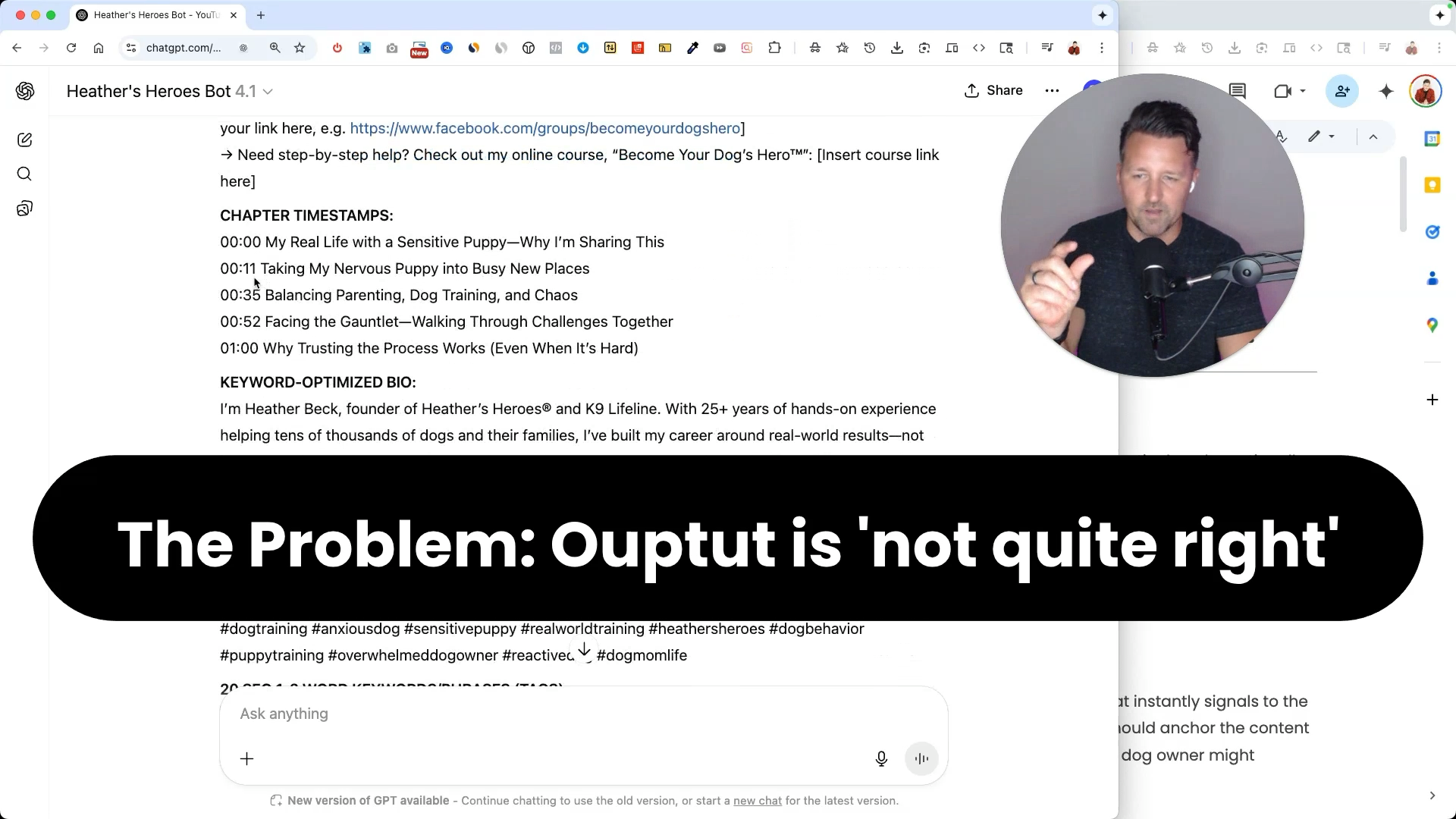
So you start the feedback process:
"Make it more conversational"
"Add more personality"
"This feels too corporate"
"Try more vivid language that people can actually see, hear, and feel"
Round after round, you refine the output until it finally sounds like you. The problem? Next week, you're back to square one with the same feedback loop.
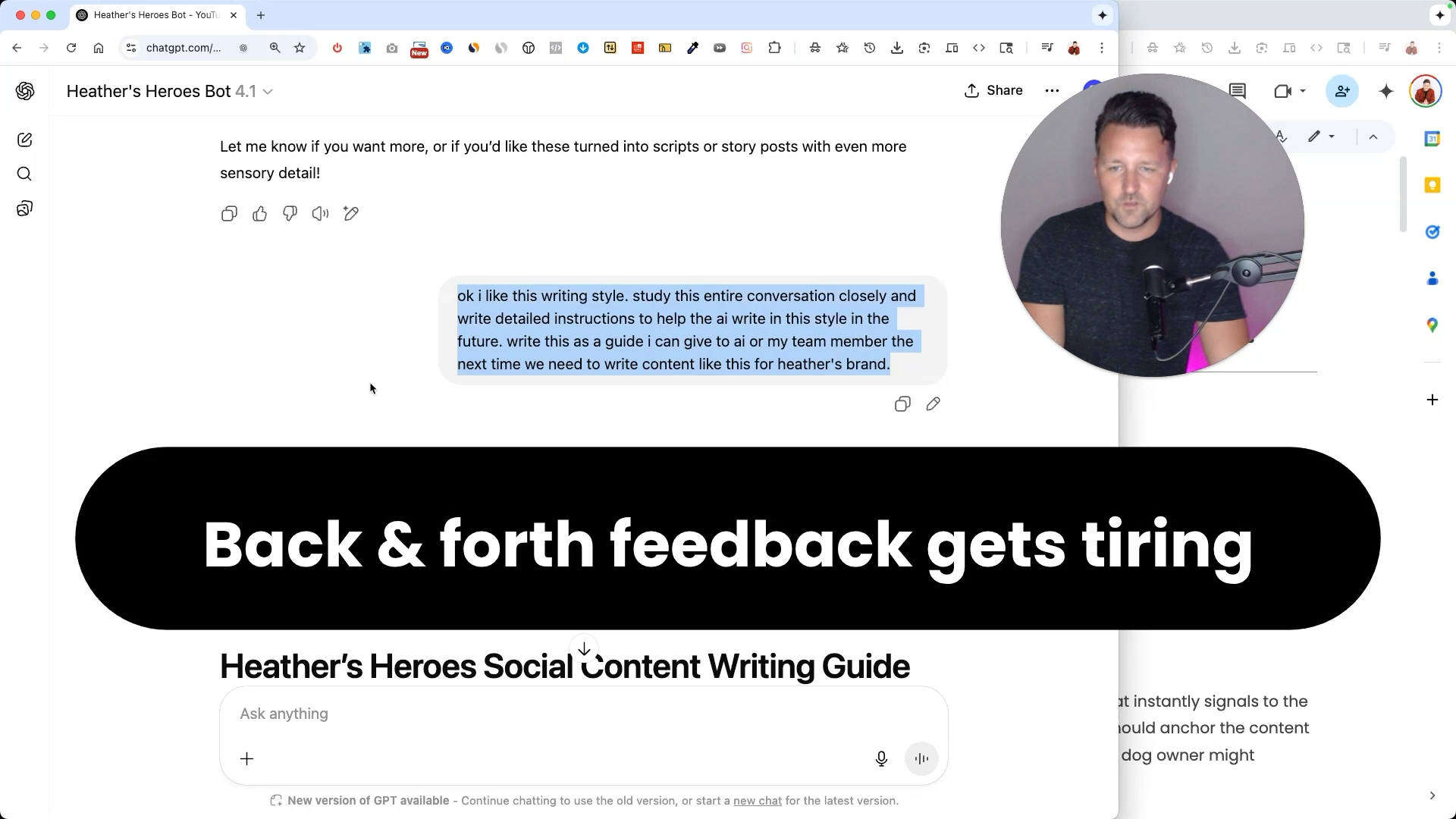
Most people accept this as just how AI works. But there's a better way.
The Conversation Analysis Method That Saves Hours
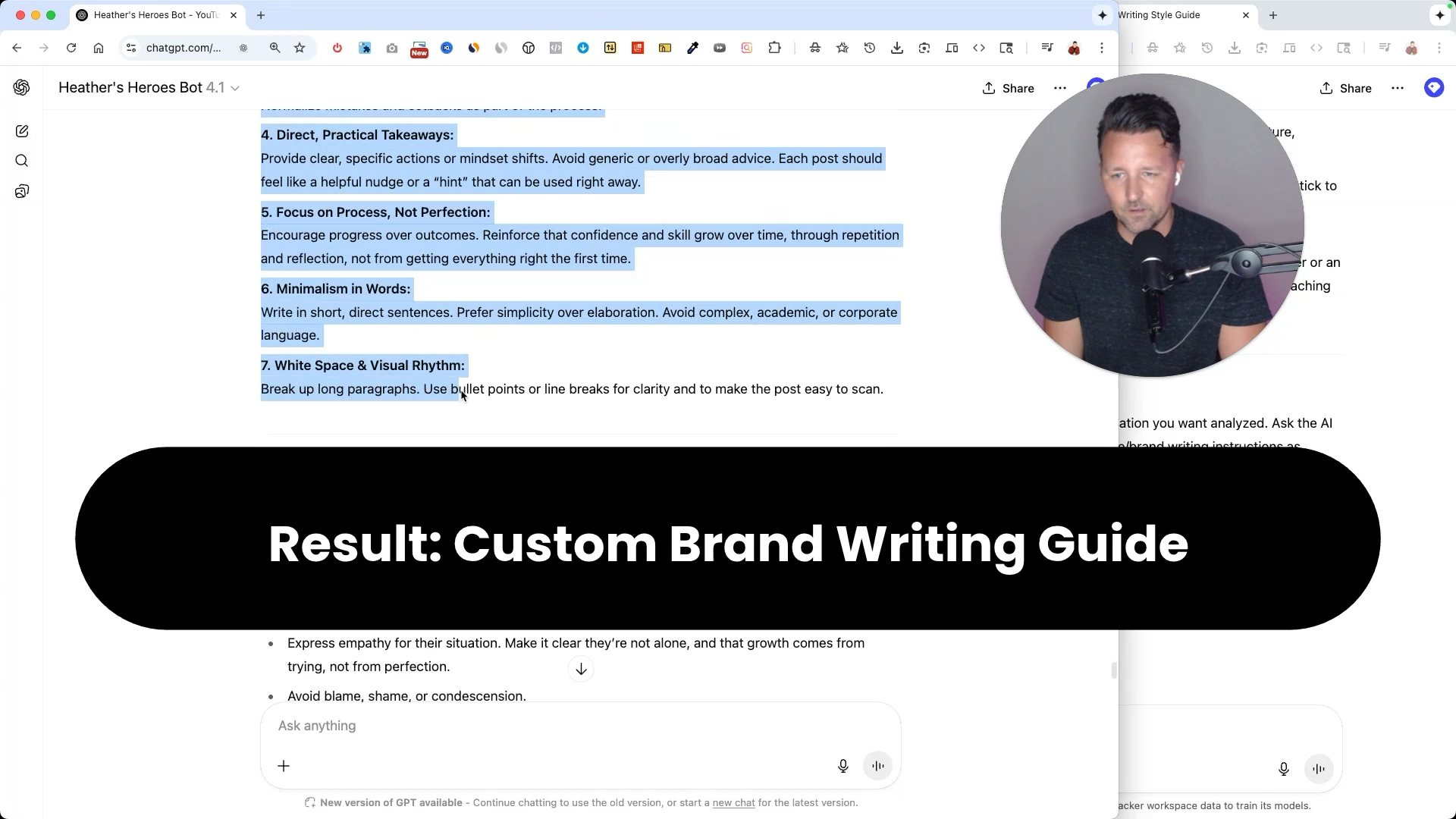
When you have a successful ChatGPT conversation (one where the final result actually sounds like your brand), don't just walk away. Use that success to train the AI for future conversations.
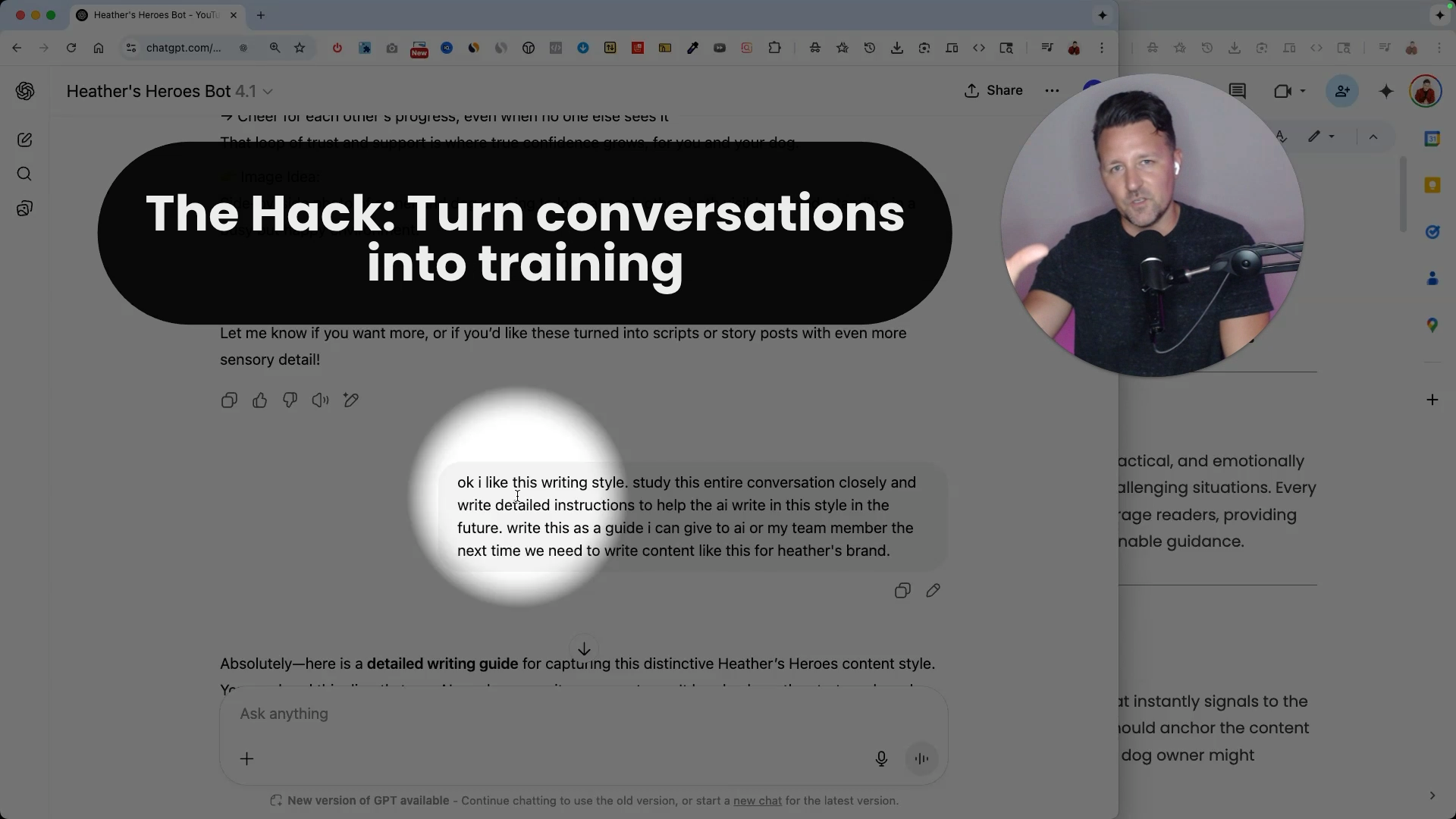
Here's the exact prompt I use at the end of any successful session:
"I like this writing style. Study this entire conversation closely and write detailed instructions to help the AI write in this style in the future. Write this as a guide I can give to AI or my team member the next time we need to write content like this for my brand."
That's it. One simple prompt that analyzes everything that just happened and creates a reusable style guide.
Why This Works Better Than Generic Instructions
The magic happens because ChatGPT examines the actual feedback you gave, the iterations you went through, and the final result you approved. It creates instructions based on your real preferences, not generic "write conversationally" advice.
But here's a key refinement I discovered: sometimes the AI gets too focused on specific examples from your conversation. When that happens, add this follow-up:
"Do it again, but just teach the underlying concept. Focus on the principles rather than specific examples."

This pushes the AI to capture the deeper patterns of your voice instead of just copying surface-level details.
From One-Time Fix to Universal Brand Guide
Once you have a style guide from one successful conversation, you can expand it. Ask ChatGPT to create a more universal version that works for emails, social media, sales pages, video scripts, and any other content you create.
The result? A complete brand writing guide that captures your unique voice across all content types.
The full prompt:
------
Prompt: Conversation Analysis & Brand Style Guide Creation
------Task: Analyze a previous AI conversation and create a set of style instructions based on the improvements and writing style used.
Role: Brand writing analyst (for AI or team member)
Context: We want to document and replicate the most effective, on-brand writing style used in a specific conversation. The goal is to distill the underlying principles, tone, and approach—avoiding direct examples—so future content matches this style.
Output: A practical, easy-to-follow guide or checklist that teaches how to think about and approach writing in this style for the brand. The guide should focus on principles, mindset, and do’s/don’ts, not copy-pasting or mimicking specific lines.
Important Note: When writing the guidelines, do not include any specific writing samples, quotes, or line-by-line examples from the transcript or source content. Focus entirely on teaching the underlying concepts, principles, and approach. Your goal is to explain how to think about writing in this style—not how to copy or imitate specific sentences.
As you analyze the conversation and create the style guide, make sure to:
Think about the intended audience. Include notes in the guide on how to speak to their needs, interests, and knowledge level.
Observe the brand’s tone, vocabulary, and attitude. Add clear guidance on how to stay consistent with this style in all content.
Pay attention to formatting and clarity. Recommend using short paragraphs, bullet points, and headings for easy reading.
Notice how the writer shows empathy and connects on a human level. Teach how to avoid robotic or distant language.
Highlight the focus on positive, solution-oriented messaging. Advise how to keep content uplifting and constructive.
Identify how the conversation encourages action or reflection. Instruct on using prompts, questions, or CTAs when relevant.
Clearly mention any brand-specific rules (like banned punctuation or phrases). List these as explicit do’s and don’ts in the guide.
Emphasize that the goal is to capture these principles in the guide—not just copy the style, but teach the reasoning and mindset behind it so others can apply it to future content.
Instructions:
Review & Analyze the Conversation
Study the entire conversation closely. Pay attention to the writing style, tone, sentence structure, pacing, word choices, formatting, and how ideas are presented.Extract the Underlying Principles
Identify what makes this style unique and effective for the brand (without focusing on specific lines or examples). Consider the following:
How does the writer engage the reader?
What tone or emotional quality is used?
Are sentences typically short or long? Is the language casual or formal?
How are important points highlighted?
Is the style direct, or does it use a lot of nuance and implication?
What is avoided (jargon, clichés, certain punctuation, etc.)?
What kind of pacing and paragraph breaks are used?
Write Generalized Style Instructions
Create a clear, detailed set of instructions or a checklist that teaches someone (or an AI) how to write in this style. The goal is to provide guidance on how to think and how to approach writing for this brand, not just copy phrases or sentence structures.
Explain the mindset and goals behind the writing style
Describe the kind of relationship the writer is building with the audience
List specific do’s and don’ts (but avoid using specific examples)
Cover how to approach content creation for this brand (voice, structure, emotional appeal, etc.)
Avoid using direct quotes or detailed examples from the original convo; stick to principles and actionable advice
Format as a Guide for Others
Write your output as a practical guide that could be handed off to a new writer or an AI prompt. Make sure it’s easy to understand, actionable, and focused on teaching the approach rather than the specifics.-----------
START SOURCE CONTENT or TRANSCRIPT
-----------Review the previous conversation above, or study the provided transcript/content attached or pasted below this prompt. If there is no content below, check this thread for attached files or previously shared conversation. If you are unable to find the required content, ask me to provide it again before proceeding. Use this content as your source material for analysis. Extract the writing principles, style guidelines, and instructions as outlined above. Do not copy lines or examples from the transcript—focus on the underlying approach and how to teach it.
-----------
How to Save and Use Your New Style Guide
Copy your finished style guide into a document and save it. Then upload it to ChatGPT projects or custom bots you create for your brand.
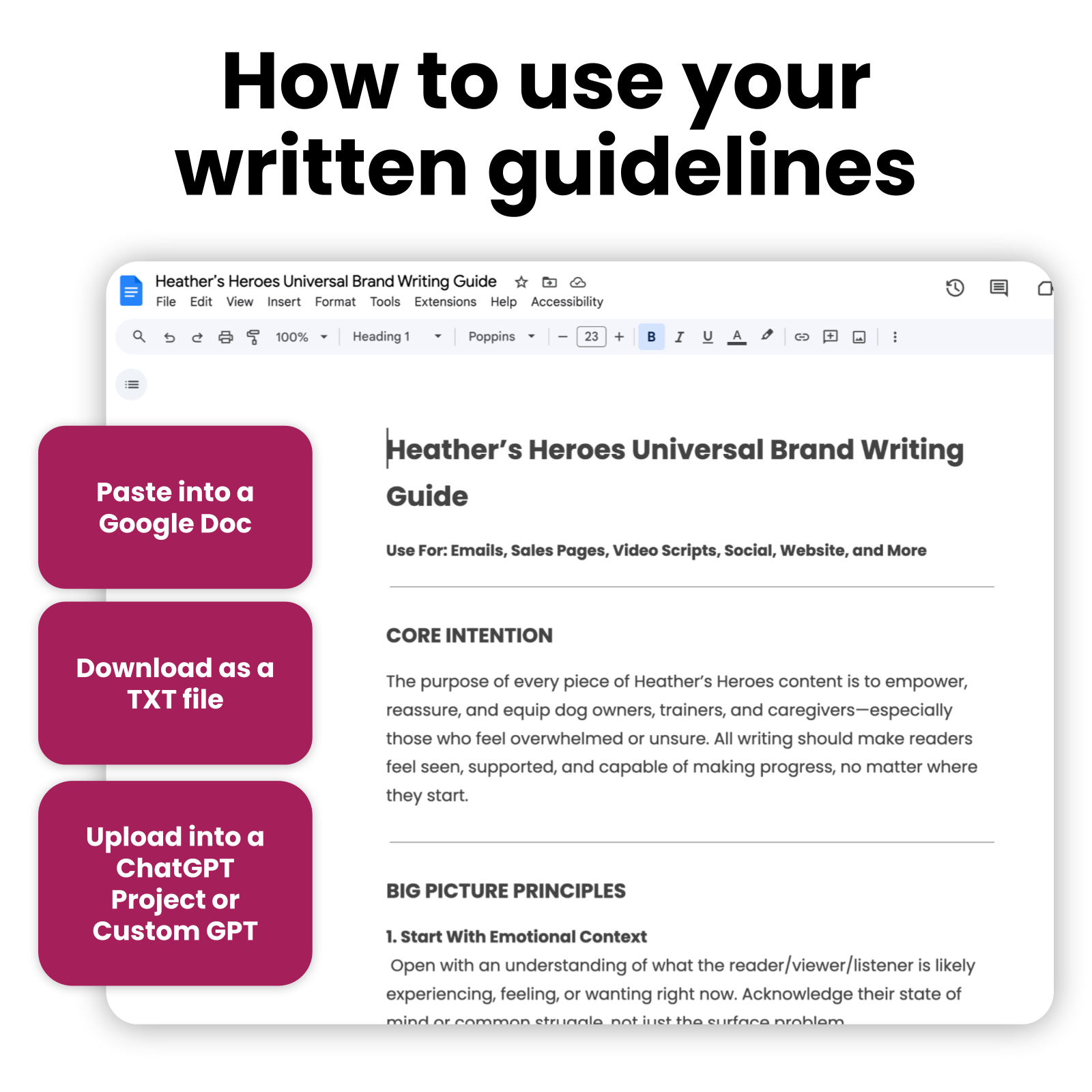
The next time you log in, ChatGPT starts with your voice instructions already loaded. No more explaining your preferences from scratch or getting generic first drafts.
If you run into issues, just tell it to reference the instructions more closely and try again. You'll rarely need to repeat yourself more than once.
Quick Implementation Steps:
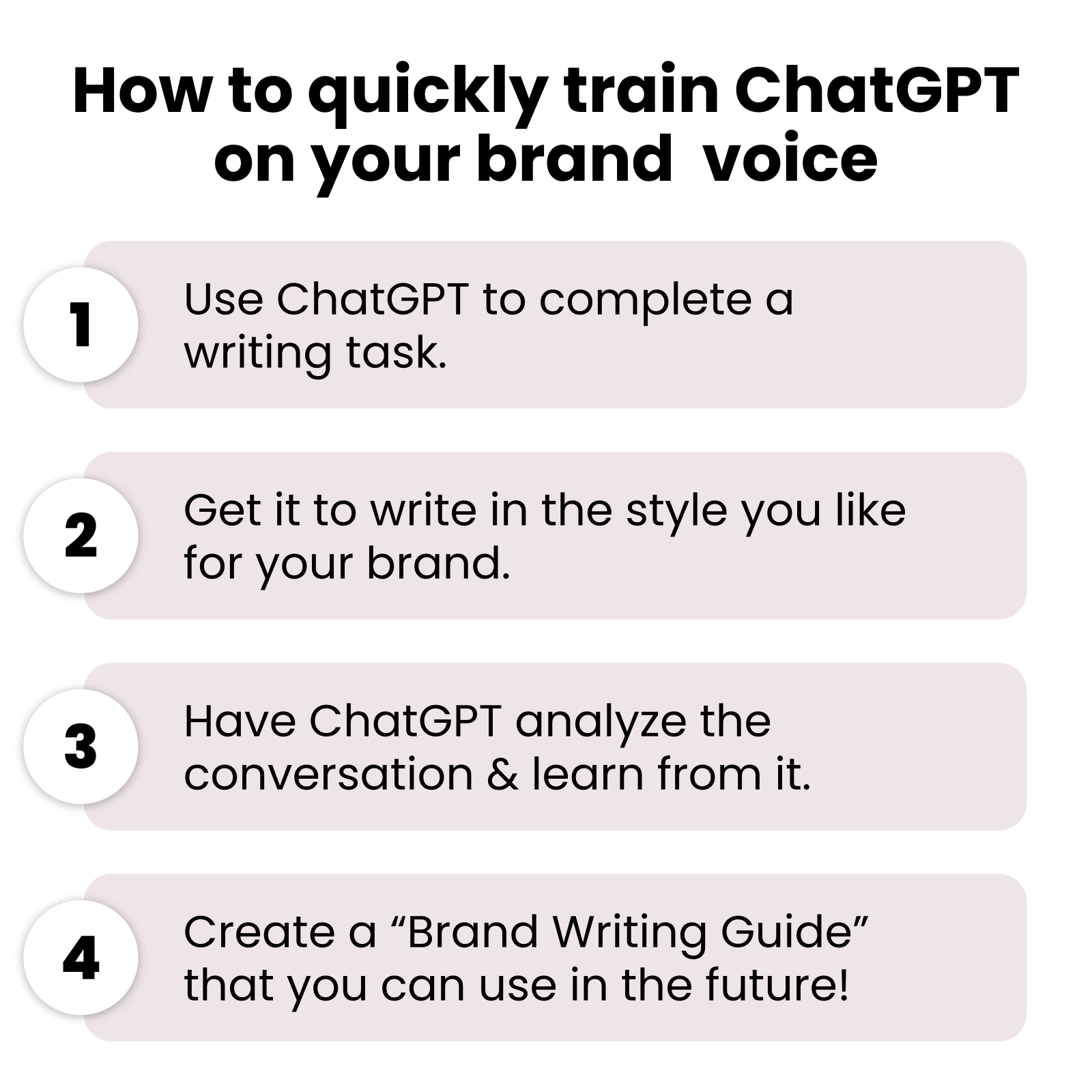
Complete a successful ChatGPT conversation for any content type
Use the conversation analysis prompt at the end
Refine the results to focus on principles over examples
Save your style guide for future use
Upload to ChatGPT projects or custom bots
The Reverse Engineering Approach for Past Conversations
Here's a bonus technique: you can apply this method to conversations you've already had. Go back through your ChatGPT history and find sessions where you got great results.
Copy the entire conversation, paste it into a new chat with the analysis prompt, and let ChatGPT extract the patterns that worked. You can build style guides from multiple successful conversations this way.
Why This Saves You Hours of Training Time
Think about how much time you spend giving the same feedback to AI tools. "Make it sound more like me." "Add more personality." "This is too formal."
This method captures all that feedback once and turns it into reusable instructions. You're basically using your past conversations to train the AI for future ones.

It's a fast, easy way to get AI tools that actually understand your brand voice without starting from zero every time.
Your Next Steps to Brand-Consistent AI Content
The next time you have a ChatGPT conversation that produces content you actually like, don't just move on to your next task. Take one minute to create a style guide from that success.
Save it. Use it. Watch how much time you save when ChatGPT starts writing in your voice from the very first draft.
Key Actions to Take:
Try this method on your next successful ChatGPT conversation
Create style guides for different content types (social media, emails, sales copy)
Build a library of brand voice instructions you can reuse
Upload guides to ChatGPT projects for instant access
Test the reverse engineering approach on past successful conversations
🔥 RECOMMENDED TRAINING:
Turn ANY Idea Into a World-Class Brand Identity In MINUTES With AI
This 3-step system uses AI to build a complete brand foundation for ANY business in just a few clicks.

Hey, I'm Andrew Lane
Founder of Design Hacker
I’ve built multiple 7-figure brands from scratch over the past 15 years. Now I’m using AI to make that process faster, smarter, and way more fun. If you want your brand to feel premium without wasting months or thousands of dollars, then this is for you!